
[1] In 2021, the project CTES (“Cultural Transfer Europe-Serbia from the 19th to the 21st Centuries”) was awarded a grant by the Science Fund of the Republic of Serbia. A team of 11 researchers from five scholarly institutions in Belgrade (Faculty of Political Science, Institute of European Studies, Faculty of Philology, Institute of Balkan Studies, and Institute for Contemporary History) investigated how cultural transfer Europe-Serbia has re-shaped modern Serbia since the beginning of the 19th century. The concept of cultural transfer analyses the flow of ideas, concepts, goods, technologies, cultural practices, and forms of knowledge. Although there is a clear hierarchy in this exchange of ideas and practices, cultural transfer does not consist only of cultural transfer from a hierarchically more influential culture to a less influential one. For example, migrant workers, who are by default politically disadvantaged, brought many cultural practices to Western countries that have significantly changed their lifestyles. Similarly, when two neighbouring cultures participate in cultural transfer, the less powerful one also makes a certain impact on the more powerful, although the effects may not be as readily noticeable.
[2] The first edited volume that resulted from this project was A Reformer of Mankind. Dimitrije Mitrinovic between Cultural Utopianism and Social Activism (2023), which focuses on an actor who originated from the Balkans, more specifically, from Bosnia and Herzegovina but left his mark in various cultural and intellectual circles in Europe, particularly in Britain, heralding the New Age culture that so powerfully influenced Western cultures in the last decades of the 20th century. This example clearly demonstrated that in cultural transfer, power relations are far less straightforward than in cultural or political impacts. In cultural transfer, all involved cultures undergo certain changes, and, therefore, cultural transfer the Balkans – Europe also needs to be analysed.
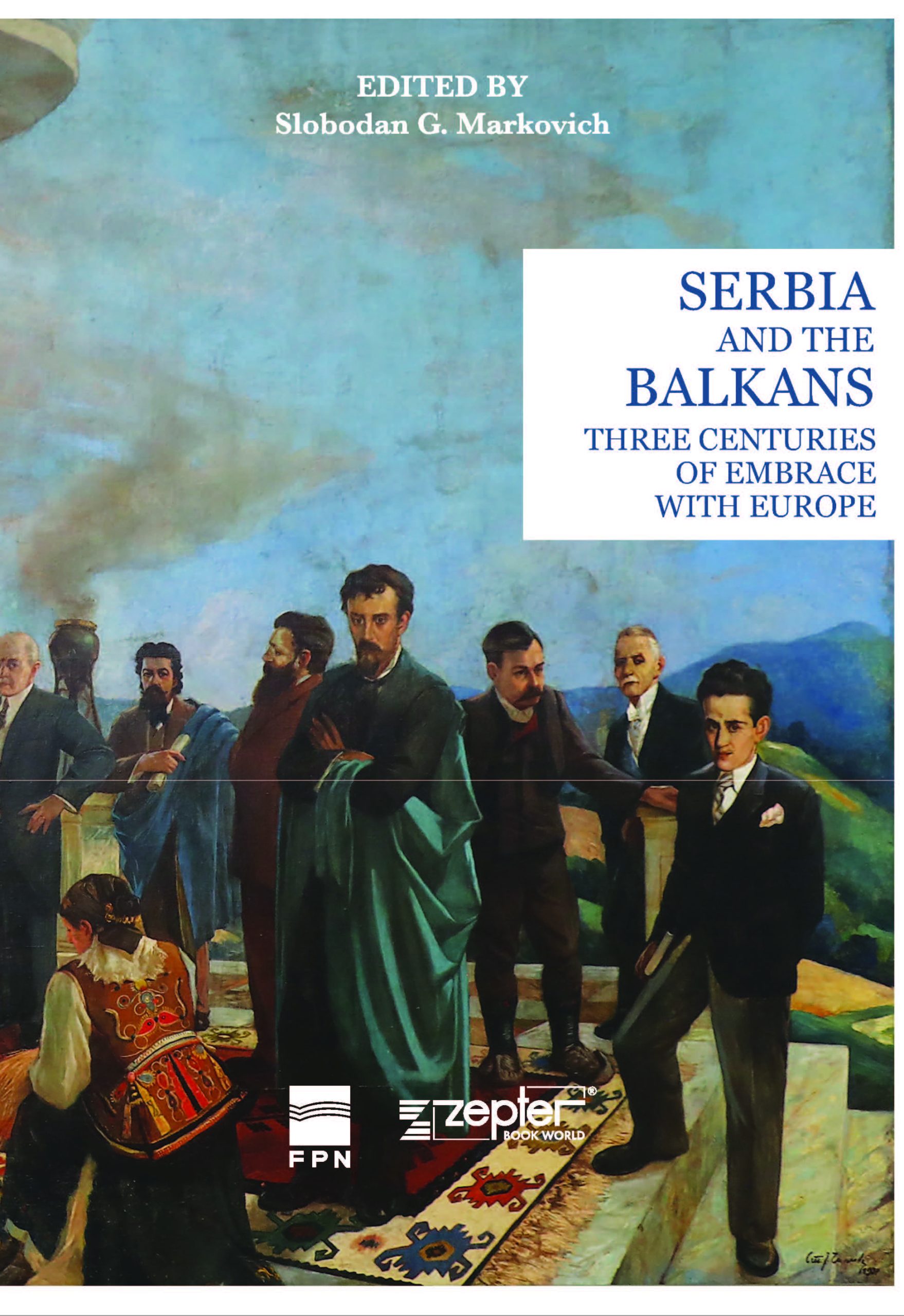
[3] Two books published before the project was launched also dealt with similar ideas: British-Serbian Relations from the 19th to the 21st Centuries (2018) and Freemasonry in Southeast Europe from the 19th to the 21st Centuries (2020). In addition to the book on Mitrinovic, the CTES project produced three more edited volumes in English. The first, entitled Cultural Transfer Europe-Serbia: Methodological Issues and Challenges,addressed methodological issues involved in applying the concept of cultural transfer to Serbia. The last two books appeared in 2025. The first, Echoes of Europe: Cultural Transfer Europe-Serbia in the Kingdom of Yugoslavia,deals with the climax of Europeanisation in the inter-war period, while the most recent one, Serbia and the Balkans: Three Centuries of Embrace with Europe, was published in September 2025. The last volume also serves as a kind of summary of the whole project. Five of the six books comprise the series entitled “Europe and Serbia”, co-published by Zepter Book World and either the Faculty of Political Science or the Institute of European Studies in 2018-25.
[4] On top of that, the project produced two more books in Serbian (Kulturni transfer Evropa-Srbija u XIX veku and Kulturni transfer Evropa-Srbija u socijalističkoj Jugoslaviji), and all eight books are open access.
[5] It is no easy task to present even summarised findings of a project that includes eight edited volumes, so we must limit ourselves here to the most salient points.
[6] The initial agent of the Europeanisation of the Balkans was the merchant class, which had its own Christian Orthodox networks, acting as a conduit for ideas, technologies, and awareness of different political systems, lifestyles and manners. An emblematic example is Dositey Obradovich, who could never have achieved what he did without the merchant network.
[7] Multiple forms of Europeanisation took place, and the rivalry between various cultural spheres is the best evidence of that. The Germanosphere, Francosphere, and Anglosphere competed for cultural domination in the nascent Balkan Christian states during the 19th century.
[8] Obstacles to Europeanisation, such as high illiteracy rates, widespread types of peasant societies with pronounced localism and clan organisation, and the (semi)-peripheral trap in which these societies found themselves, or, simply put, their economic underdevelopment, constrained and slowed down the pace of European cultural transfer and Europeanisation.
[9] Horizontal Europeanisation was much quicker and more effective than its vertical counterpart. Wherever groups from Western and Central Europe came into direct contact with the inhabitants of the Balkans and spent some time or lived with them, they established horizontal links with local populations in South-East Europe. The same applies to guest/migrant workers. In cases when the relations between the actors of Europeanisation and their recipients were vertical, European cultural transfer was likely to encounter hostile responses that slowed down its acceptance.
[10] Prominent European intellectuals, writers, and travellers also played an important role in this process. Their assessments encouraged the Balkan Westernisers in their efforts and helped them construct model societies based on European practices. They appeared in the role of external accelerators and included Western (European and American) Philhellenes in Greece, the German Romantics in Serbia (J. W. Goethe, Jacob Grimm, and Leopold von Ranke), and Protestant philanthropists in Bulgaria. In Serbia’s case, foreign accelerators, in addition to the German Romantics, were French intellectuals, writers, politicians, and officers who, during the Great War, wholeheartedly supported Serbia and later contributed to the self-perception of Yugoslav elites that viewed the Kingdom of Yugoslavia as an unambiguously European country.
[11] In the previous two centuries, the scope of Europeanisation was probably much broader in Balkan societies than previous studies have suggested. The reason is that local accommodations, hybridisations, and appropriations were not seen as part of the transfer process. When we account for these forms of transfer, the general picture of European cultural transfer becomes more complex, but also more dynamic and inclusive.
[12] At the beginning of the 21st century, new relevant actors that could contribute to both globalisation and Europeanisation in Serbia are members of the IT community, students who participate in European student mobility programs, migrant workers from Serbia employed in European countries, artists, athletes, and alumni of European academic and professional programmes. Although Serbian society is deeply divided politically and culturally, all potential actors in Europeanisation seem to be united in their view that Serbia should be a state underpinned by European values and standards. This consensus guarantees that Europeanisation is a process that will continue and is even likely to accelerate in Serbia, regardless of the preferences of the incumbent Serbian regime or political élites in general.
Slobodan G. Markovich is Professor of the Faculty of Political Science, Member of Academia Europaea (London), Head of the CTES project (2022-2025), and editor of the “Europe and Serbia” series.
The contribution was originally published in: NIN Diplomacy [Belgrade], Issue 3 (Winter 2025), 12-13.
LINKS to open access titles in English:
Slobodan G. Markovich (ed.), British-Serbian Relations from the 19th to the 21st Centuries (Belgrade: Zepter Book World and Faculty of Political Science, 2018). Vol 1: Serbia and Europe
Slobodan G. Markovich (ed.), Freemasonry in Southeast Europe from the 19th to the 21st Centuries (Belgrade: Zepter Book World and Institute of European Studies, 2020). Vol. 2: Serbia and Europe
Slobodan G. Markovich (ed.), A Reformer of Mankind. Dimitrije Mitrinovic between Cultural Utopianism and Social Activism (Belgrade: Zepter Book World and Faculty of Political Science 2023). Vol. 3: Serbia and Europe/Vol. 2: CTES
Slobodan G. Markovich (ed.), Cultural Transfer Europe-Serbia: Methodological Issues and Challenges (Belgrade: Zepter Book World and Faculty of Political Science 2023). Vol 1: CTES
Aleksandra Drjurić Milovanović and Ivana Pantelić (eds.), Echoes of Europe: Cultural Transfer Europe-Serbia in the Kingdom of Yugoslavia (Belgrade: Zepter Book World and Institute of European Studies, 2023). Vol. 4: Serbia and Europe/Vol. 4: CTES
Slobodan G. Markovich (ed.), Serbia and the Balkans: Three Centuries of Embrace with Europe (Belgrade: Zepter Book World and Faculty of Political Science, 2025). Vol. 5: Serbia and Europe/Vol. 6: CTES
LINKS to open access titles in Serbian/Serbo-Croat:
Slobodan G. Markovich (ed.), Kulturni transfer Evropa-Srbija u XIX veku [Cultural Transfer Europe-Serbia in the 19th Century] (Belgrade: Institute of European Studies and Dosije Studio, 2023). Vol. 2: CTES
Marina Simić and Ivana Pantelić (eds.), Kulturni transfer Evropa-Srbija u socijalističkoj Jugoslaviji [Cultural Transfer Europe-Serbia in Socialist Yugoslavia] (Belgrade: Institute of European Studies and Dosije Studio, 2024). Vol. 5: CTES
Read also on this Europa-Blog: European Union Future For Western Balkans Countries, authored by Wolfgang Schmale
Schreibe einen Kommentar
Du musst angemeldet sein, um einen Kommentar abzugeben.